

Choosing the right food for your dog is one of the most important decisions you’ll make as a pet owner. A well-balanced diet provides the foundation for your dog’s health, energy, and longevity. This comprehensive guide covers everything you need to know about feeding your canine companion.
Essential Nutritional Requirements
Dogs require six fundamental nutrient categories for optimal health:
- Water is the most critical nutrient, comprising 60-70% of an adult dog’s body weight. Dogs can survive losing all their body fat and half their protein, but losing just 10% of their body water can cause serious illness.
- Protein serves as the building block for cells, tissues, organs, enzymes, and antibodies. Dogs need all essential amino acids, with their bodies producing only 13 of the required 23 amino acids. High-quality animal proteins from chicken, beef, fish, and eggs provide complete amino acid profiles.
- Fats provide concentrated energy and essential fatty acids including linoleic acid, omega-6, and omega-3 fatty acids. These support skin health, coat shine, and overall cellular function.
- Carbohydrates supply energy and support intestinal health through fiber content. While not essential, they provide glucose for critical organs like the brain.
- Vitamins and minerals facilitate numerous chemical reactions throughout the body. A balanced commercial diet typically provides adequate amounts without requiring supplements.
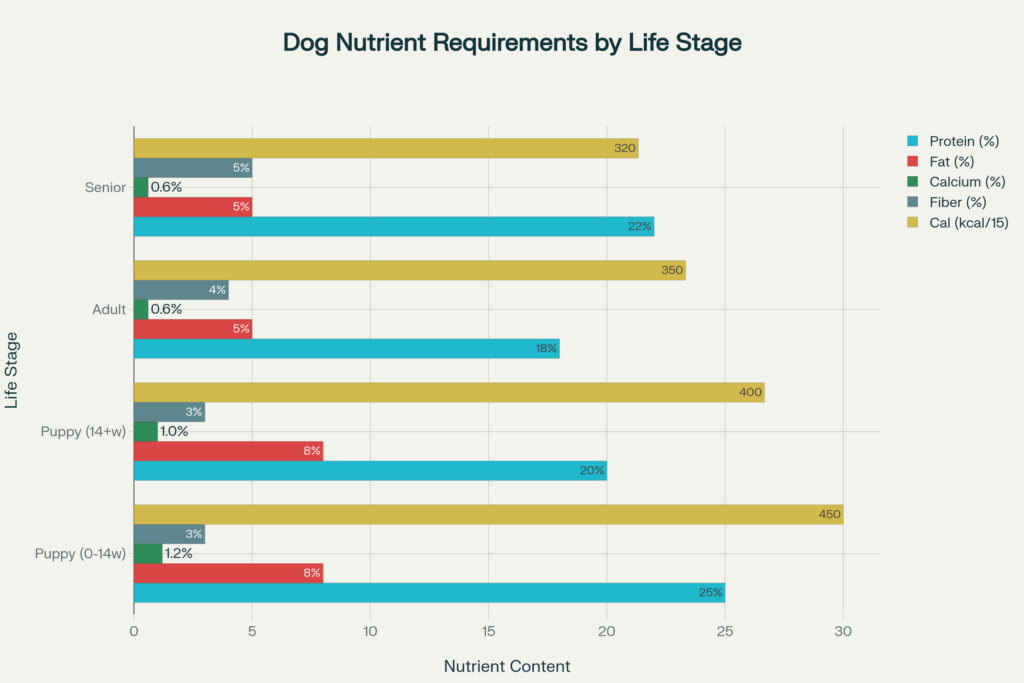
Life Stage Nutrition Requirements
Puppy Nutrition
Puppies have the highest nutritional demands due to rapid growth and development. Key requirements include:
-
Protein: 25% for puppies under 14 weeks, decreasing to 20% after 14 weeks
-
Fat: Higher fat content for energy-dense nutrition
-
Calcium and phosphorus: Essential for proper bone development, though excess calcium can cause developmental issues in large breeds
-
Feeding frequency: 3-4 meals daily for puppies under 3 months, reducing to 2-3 meals as they mature
Large breed puppies require specially formulated foods with restricted calcium to prevent developmental orthopedic diseases.
Adult Dog Nutrition
Adult dogs need maintenance-level nutrition focused on:
-
Protein: Minimum 18% for maintenance
-
Balanced macronutrients: Appropriate protein, fat, and carbohydrate ratios
-
Feeding schedule: 1-2 meals daily works for most adults
Senior Dog Nutrition
Senior dogs (typically 7+ years) have unique nutritional needs:
-
Higher protein: 22-25% to maintain muscle mass and combat age-related protein loss
-
Reduced calories: Lower energy requirements but maintained protein needs
-
Joint support: Glucosamine, chondroitin, and omega-3 fatty acids
-
Enhanced digestibility: Easier-to-process ingredients for aging digestive systems
-
Antioxidants: Vitamin E and other compounds to support cognitive function
Types of Dog Food
Commercial Dog Food
- Dry Kibble offers convenience and dental benefits through chewing action. It’s cost-effective, has a long shelf life, and works well with food puzzles for mental stimulation.
- Wet/Canned Food provides higher moisture content (60-80% vs 10% in dry food). Benefits include better palatability, increased satiety for weight management, and easier consumption for dogs with dental issues.
- Freeze-Dried Foods retain more nutrients than heavily processed kibble while offering convenience. Brands like Stella & Chewy’s provide nutrient-dense options with organ meats and separated proteins for dogs with sensitivities.
Fresh and Raw Diets
- Fresh Cooked Meals from companies like JustFoodForDogs offer restaurant-quality ingredients with AAFCO compliance. These provide transparency in sourcing while maintaining food safety through cooking.
- Raw Diets remain controversial. While some owners report benefits like shinier coats and better digestion, veterinary associations warn of bacterial contamination risks and potential nutritional imbalances. Raw diets are not recommended for immunocompromised dogs, puppies, or dogs with serious health conditions.
Commercial vs. Homemade Food
Commercial Food Advantages
-
Nutritional balance: Formulated to meet AAFCO standards
-
Convenience: Ready-to-serve with consistent quality
-
Safety: Regulated manufacturing processes
-
Veterinary testing: Many brands conduct feeding trials
Homemade Food Benefits
-
Ingredient control: Complete knowledge of what your dog consumes
-
Customization: Tailored for specific dietary needs or allergies
-
Freshness: No preservatives or artificial additives
However, homemade diets require careful formulation by veterinary nutritionists to ensure nutritional completeness.
Understanding Food Labels and Standards
AAFCO Guidelines
The Association of American Feed Control Officials (AAFCO) sets nutritional standards for pet food. Look for statements indicating:
-
“Complete and balanced nutrition”
-
“Formulated to meet AAFCO nutritional levels”
-
Life stage appropriateness (Adult Maintenance or Growth and Reproduction)
Reputable brands meeting WSAVA (World Small Animal Veterinary Association) guidelines include Purina, Hills Science Diet, Royal Canin, Iams, and Eukanuba.
Ingredients to Avoid
Harmful ingredients that should be avoided include:
- Toxic substances: Chocolate, xylitol, onions, garlic, grapes, and avocado
- Harmful preservatives: BHA, BHT, ethoxyquin, and nitrates
- Poor quality ingredients: Excessive meat meal of unknown origin, rendered fats, and artificial food dyes
- Allergens: Specific ingredients your dog has shown sensitivity to
Special Dietary Considerations
Grain-Free Debate
The grain-free trend has generated significant discussion. While some dogs benefit from grain-free diets due to allergies or sensitivities, grains are not inherently harmful for most dogs. Many grain-free kibbles actually contain more carbohydrates than grain-inclusive formulas.
Organic Dog Food
Organic options offer several advantages:
-
Reduced exposure to pesticides and synthetic chemicals
-
Higher nutritional density in some cases
-
Better digestibility for sensitive dogs
-
Environmental sustainability
Top Dog Food Brands and Recommendations
Premium Brands
- Royal Canin offers breed-specific formulations backed by veterinary research. Their specialized kibble shapes and targeted nutrition address specific breed needs.
- Orijen provides biologically appropriate nutrition with 85% animal ingredients and no fillers. This premium brand mirrors ancestral diets with fresh, regional ingredients.
- Open Farm emphasizes ethically sourced, sustainable ingredients with traceable supply chains. Their formulations suit dogs with sensitive stomachs.
Value Options
- Pedigree offers nutritionally balanced, affordable nutrition with digestive-supporting ingredients. It’s NRC-compliant and suitable for general health maintenance.
- Drools provides high-protein formulas at reasonable prices, supporting lean muscle development without synthetic dyes.
Specialized Diets
Acana offers grain-free, single-protein options ideal for dogs with food sensitivities. Their fish-based formulas provide EPA/DHA for skin health.
Hill’s Science Diet and Royal Canin offer therapeutic diets for specific health conditions when recommended by veterinarians.
Feeding Guidelines and Best Practices
Portion Control
-
Feed based on your dog’s ideal weight, not current weight
-
Generally, dogs need 2-3% of their body weight in food daily
-
Divide daily portions into 2-3 meals for better digestion
Feeding Schedule
-
Puppies: 3-4 meals daily
-
Adults: 2 meals daily
-
Seniors: 2-3 smaller meals to aid digestion
Monitoring and Adjustment
-
Regular body condition scoring with your veterinarian
-
Adjust portions based on activity level, age, and health status
-
Monitor for food allergies or sensitivities
Safe Human Foods for Dogs
Many human foods can serve as healthy treats when given in moderation:
- Proteins: Cooked chicken, beef, fish, and eggs (always fully cooked and unseasoned)
- Fruits: Apples, bananas, blueberries, and watermelon (remove seeds and pits)
- Vegetables: Carrots, green beans, sweet potatoes, and pumpkin
- Other safe options: Plain rice, plain peanut butter (xylitol-free), and small amounts of plain yogurt
Conclusion
The best food for your dog depends on their individual needs, life stage, health status, and your budget. While premium brands offer superior ingredients and targeted nutrition, many mid-range options provide excellent value and complete nutrition. The key is selecting a food that meets AAFCO standards, suits your dog’s specific needs, and maintains their optimal health.
Always consult with your veterinarian when making dietary changes, especially if your dog has health issues or special requirements. Regular monitoring of your dog’s body condition, energy levels, and overall health will help ensure you’re providing the best possible nutrition for your faithful companion.
Remember that the “best” food is one that keeps your dog healthy, happy, and thriving throughout their life. Focus on quality ingredients, appropriate life-stage formulation, and your dog’s individual response to find the perfect nutritional solution.